The Environmental Cost of “Going Big”
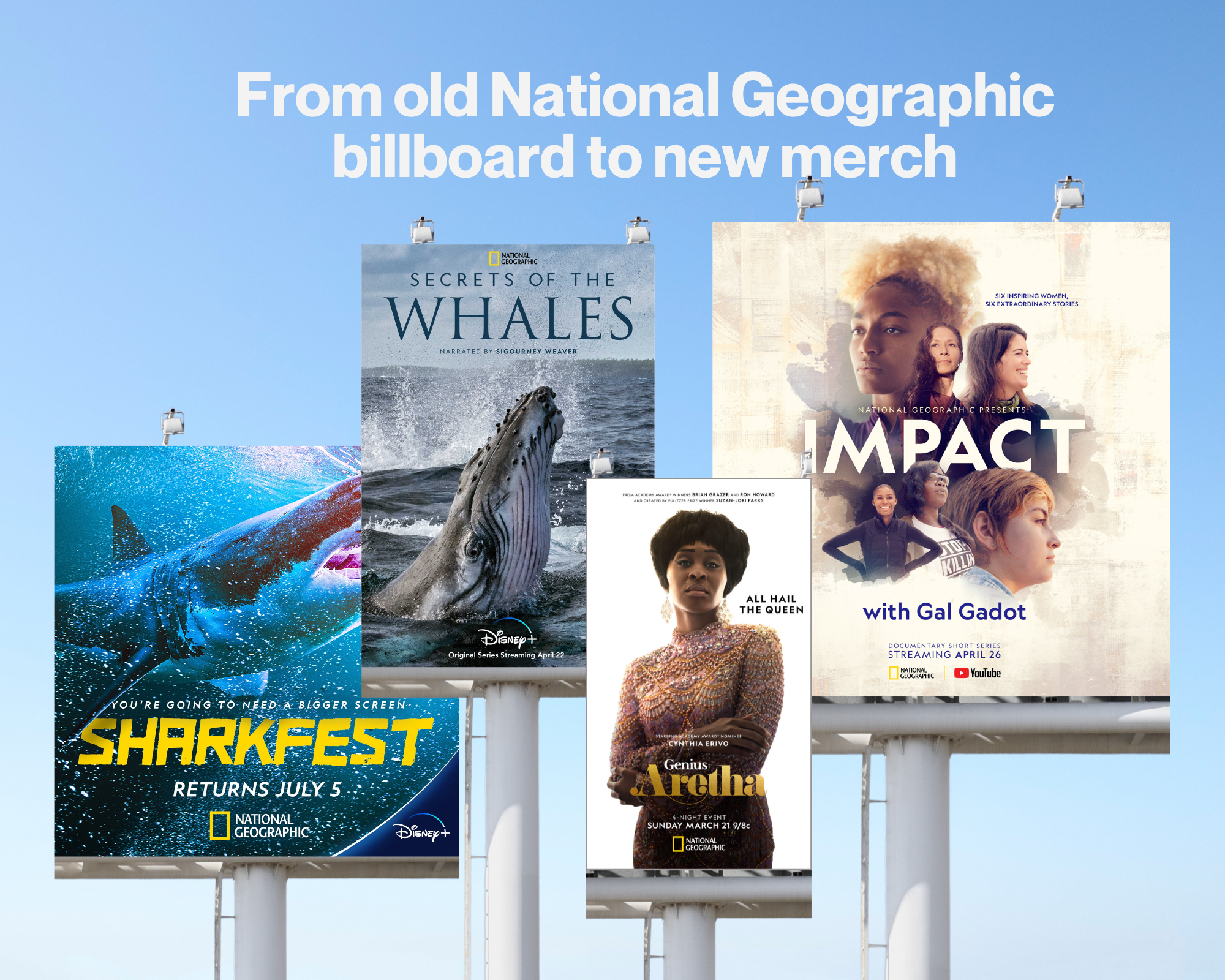
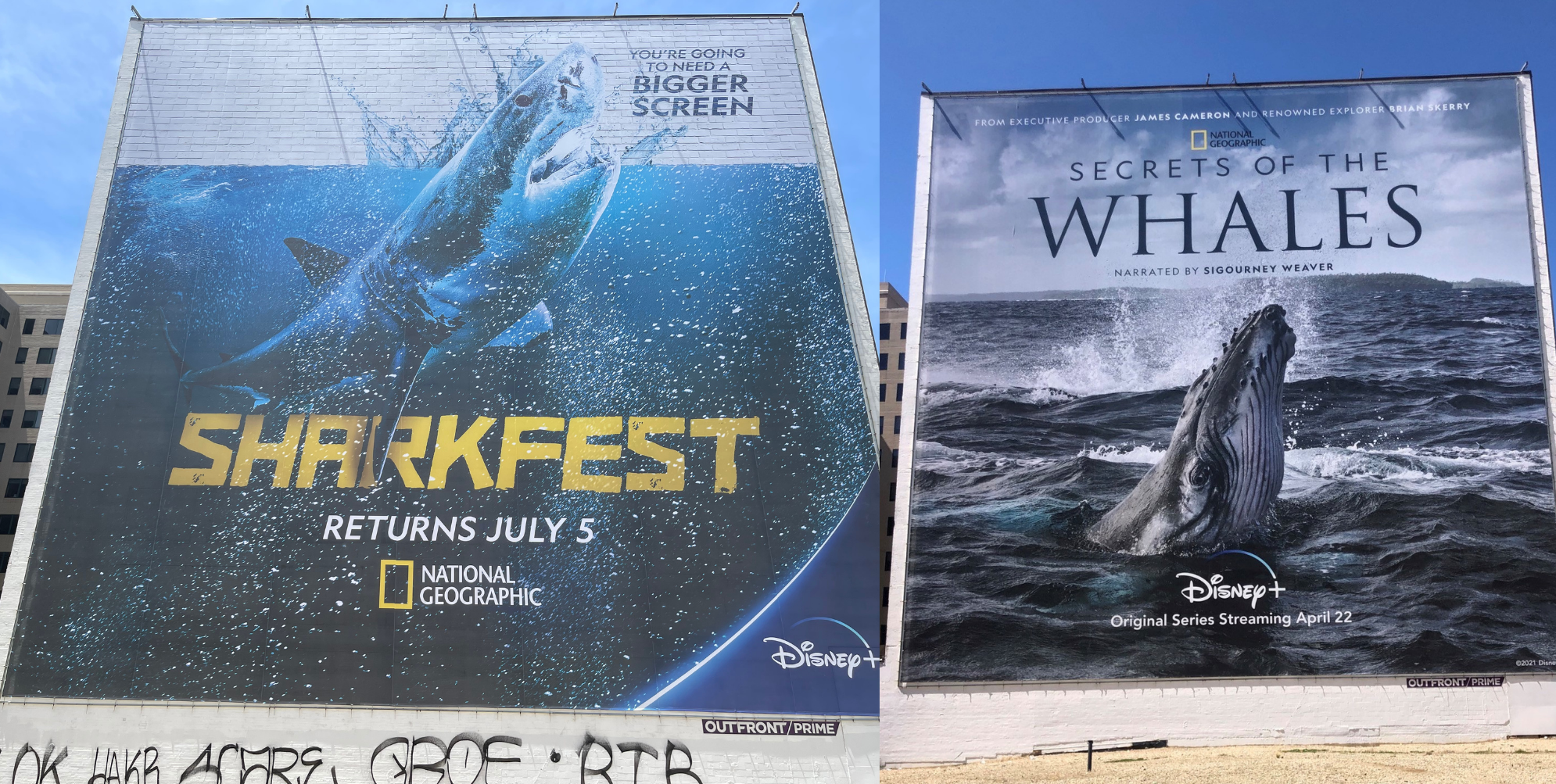
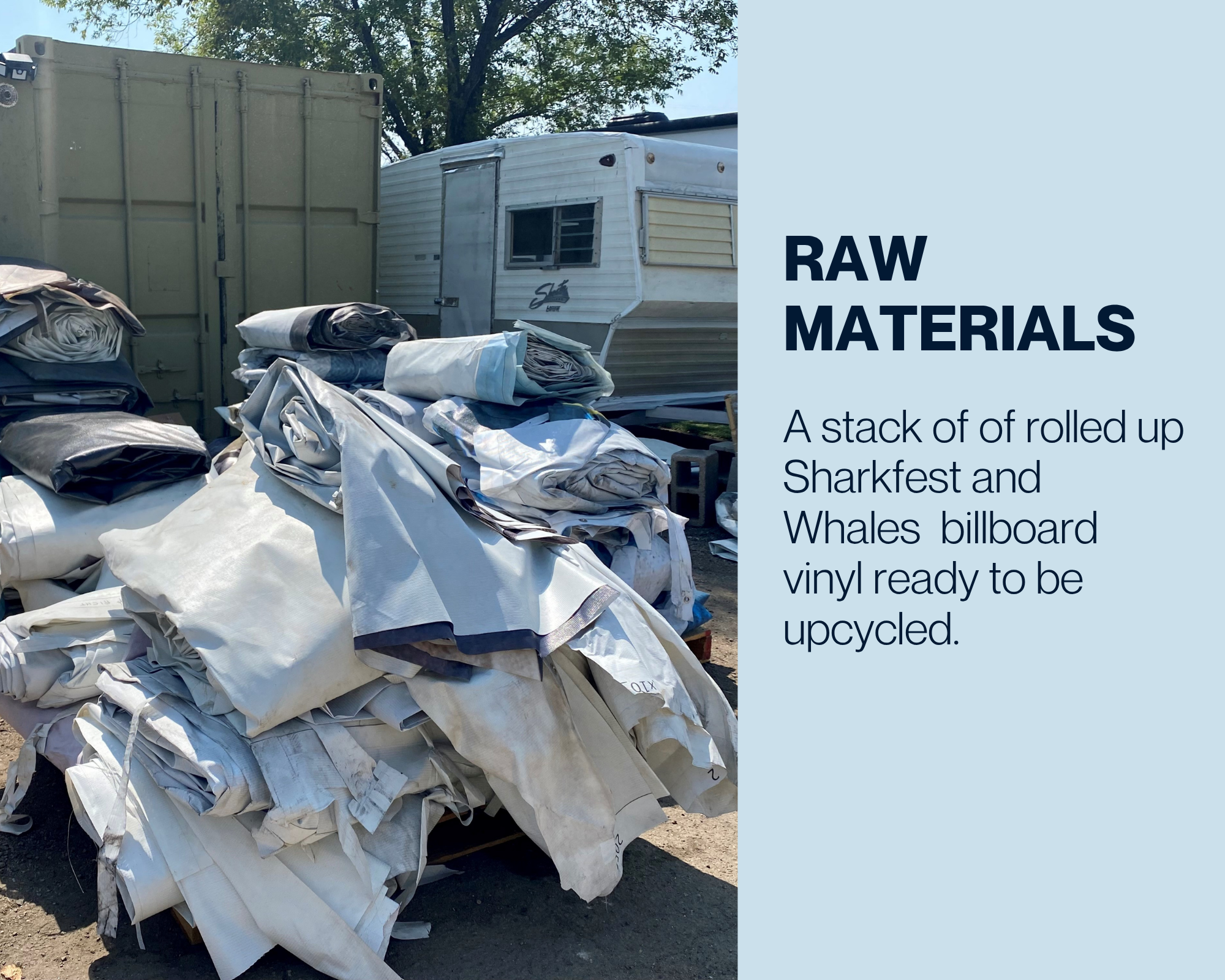
In the world of high-impact advertising, size matters. To promote global hits like Sharkfest and Genius, National Geographic utilizes massive outdoor billboards. These banners are engineered to be indestructible—made from heavy-duty PVC vinyl or reinforced mesh designed to survive the elements.
However, once the campaign concludes, these massive materials often face a grim reality: the landfill. Because PVC is not traditionally recyclable, it can sit for centuries. At Ecologic Designs, we saw this as a design challenge. We partnered with National Geographic to “close the loop,” transforming hundreds of pounds of marketing waste into high-end, functional gear.
Engineering Durability: Sharkfest & Secrets of the Whales
These two campaigns utilized industrial-grade vinyl. While beautiful, this material is notoriously difficult to process due to its weight and rigidity.
-
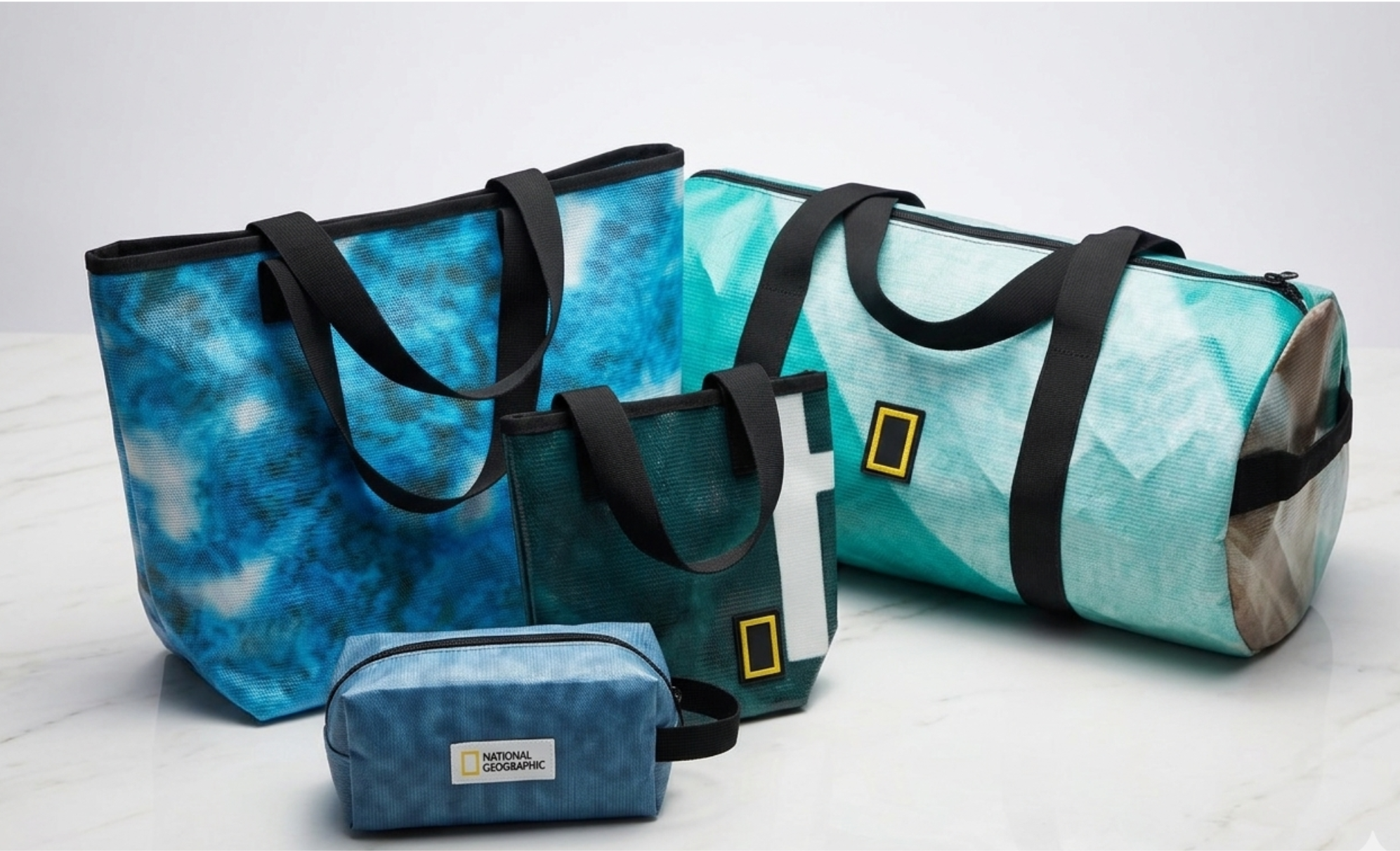
The Technical Challenge: Every billboard is unique. For Sharkfest, our design team had to “finesse the crop.” We didn’t just want blue bags; we wanted the energy of the shark. We strategically mapped the cutting patterns to ensure the shark’s fin, the ocean’s spray, and the iconic yellow National Geographic border appeared on the most visible panels of the totes.
-
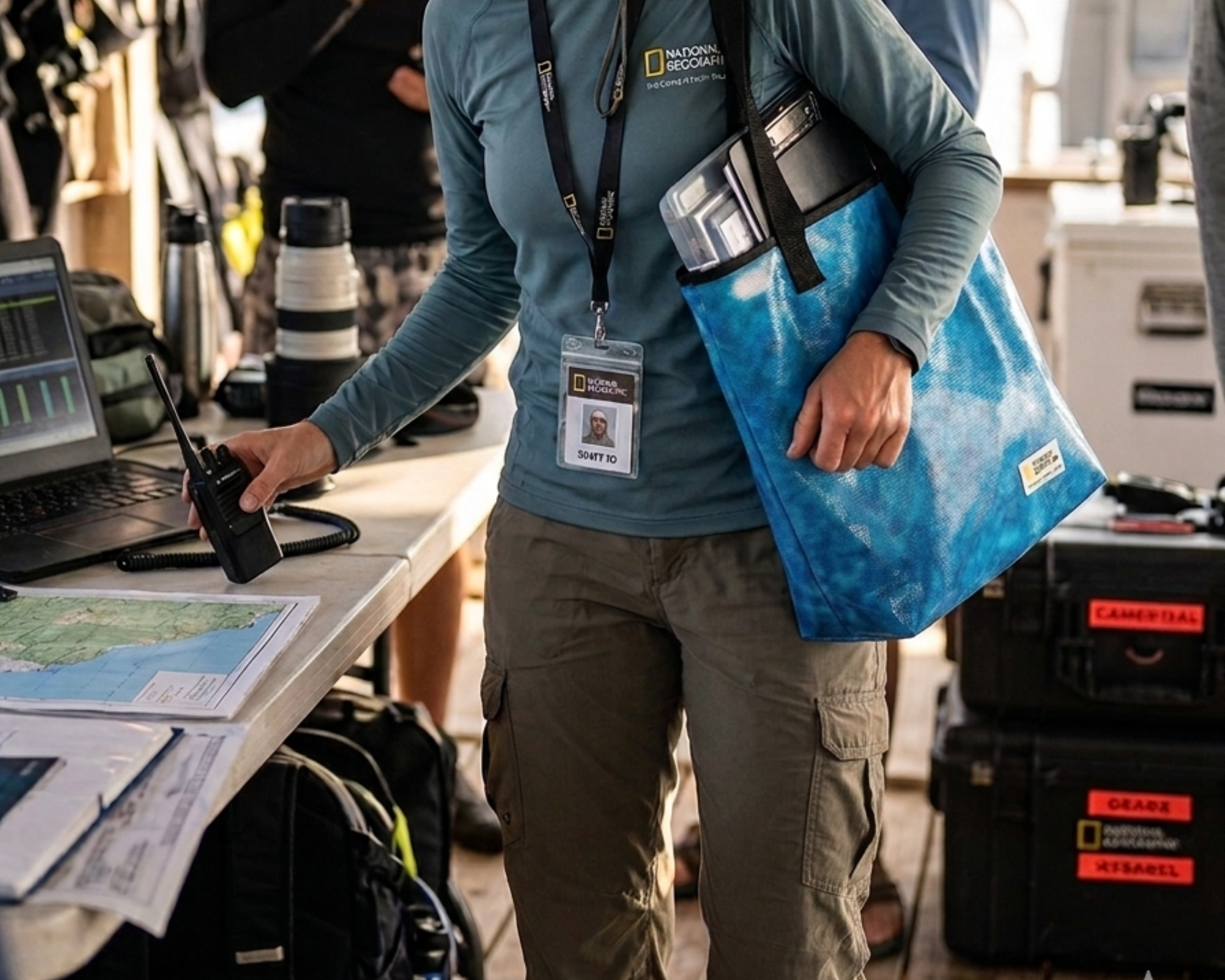
The Result: We produced a series of water-resistant, ultra-durable bags. Because billboard vinyl is designed to withstand 50mph winds and UV rays, these totes are essentially “commuter-proof,” naturally shedding rain and resisting tear.
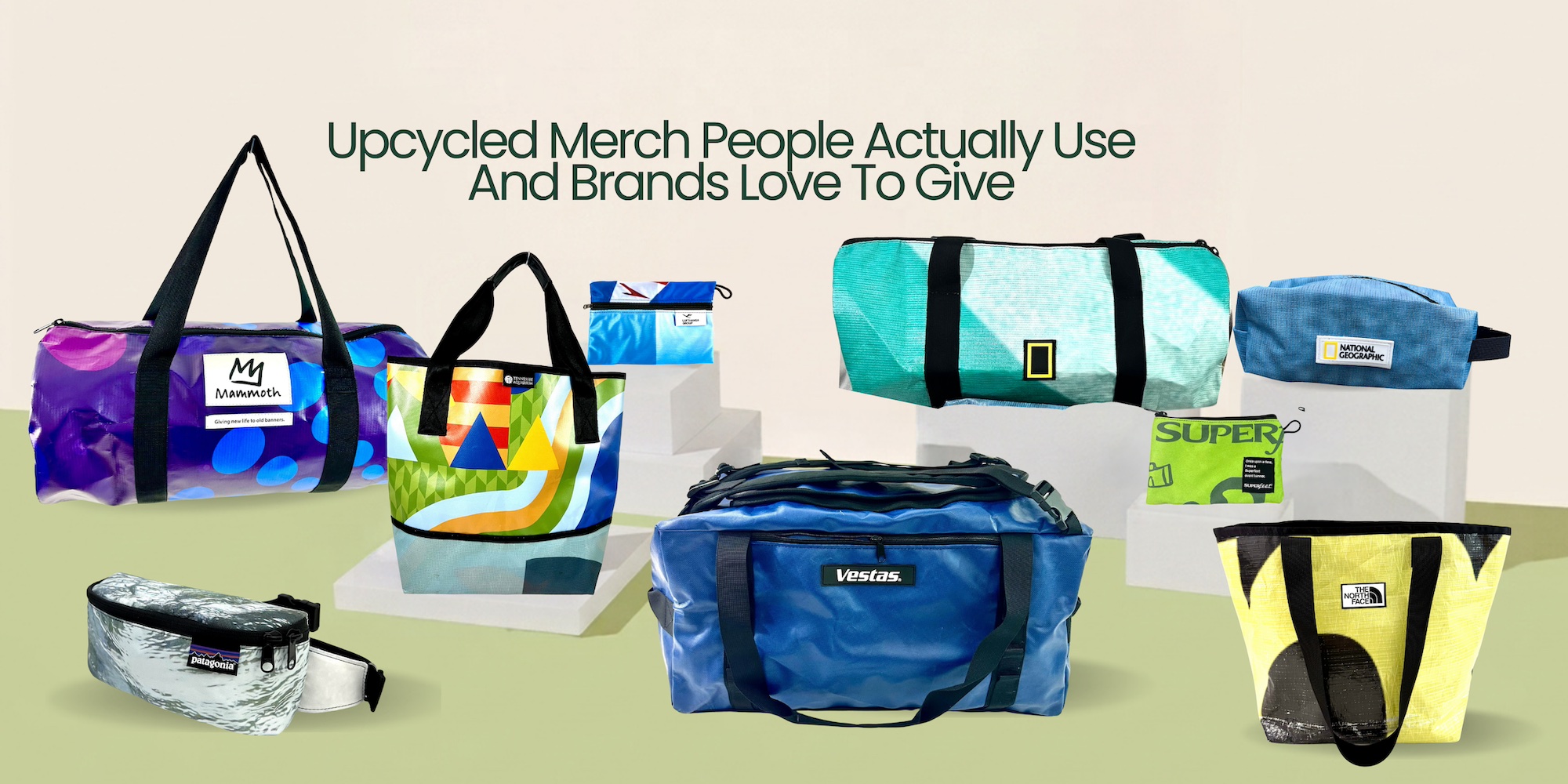
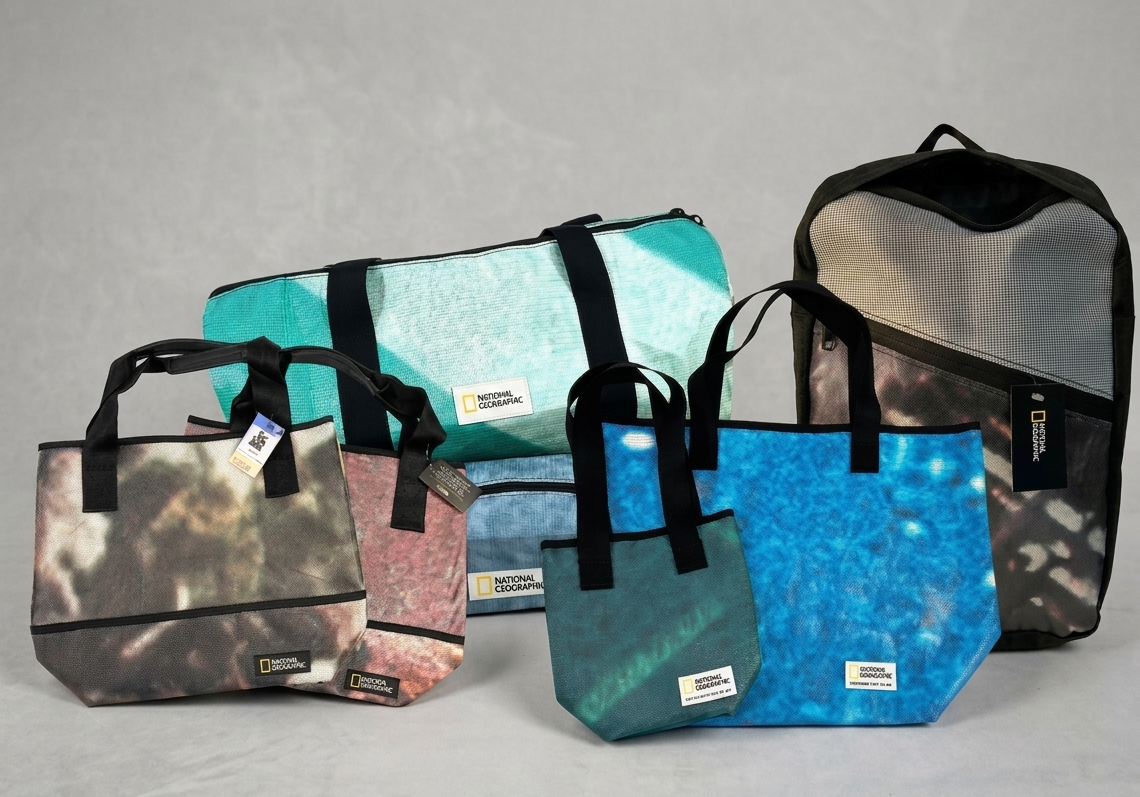
- We helped them to create: Tote bags, Duffle Bags and Travel kits
Textural Innovation: IMPACT & Genius: Aretha
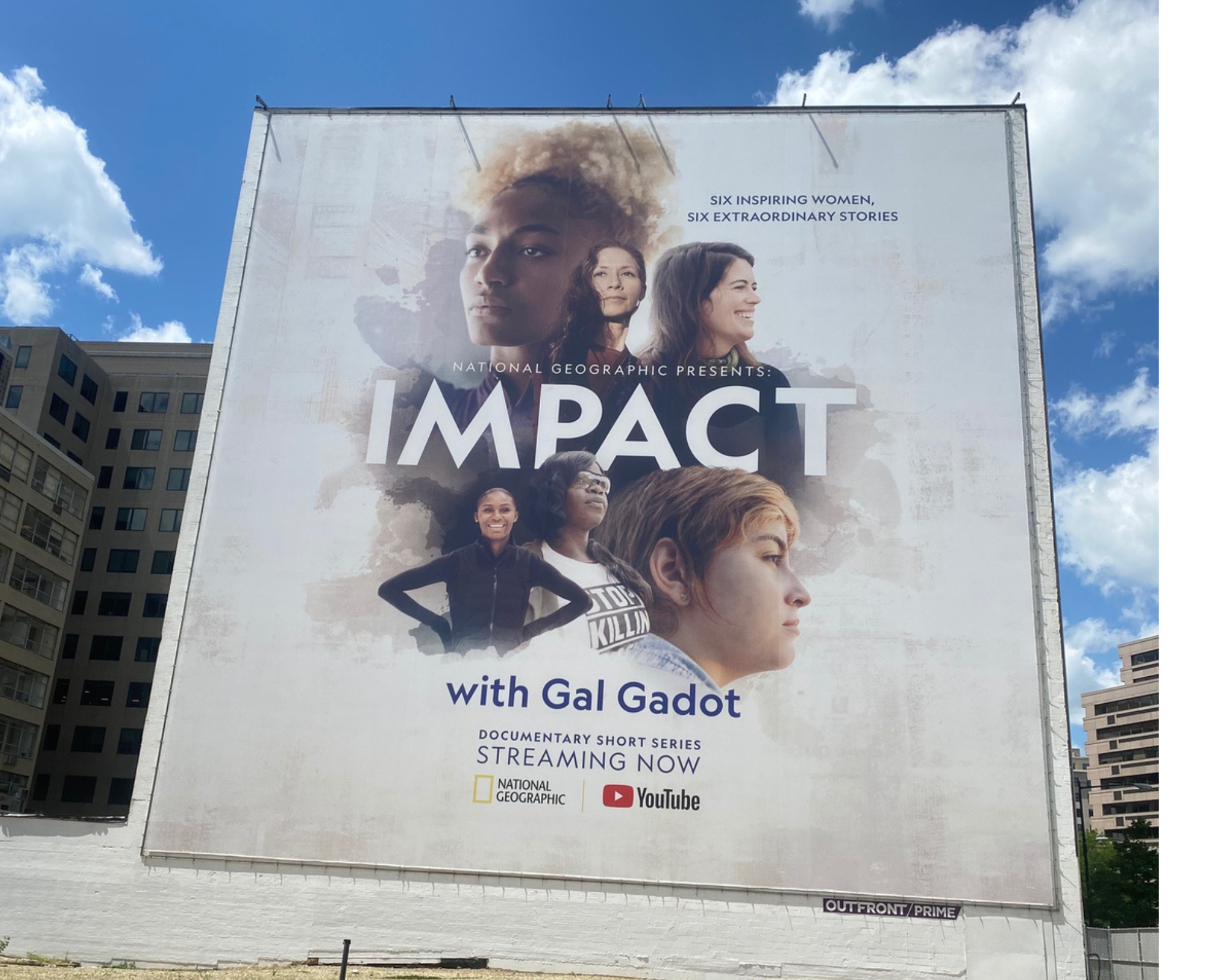
The billboards for IMPACT with Gal Gadot and Genius: Aretha presented a different opportunity. These were printed on premium architectural mesh.
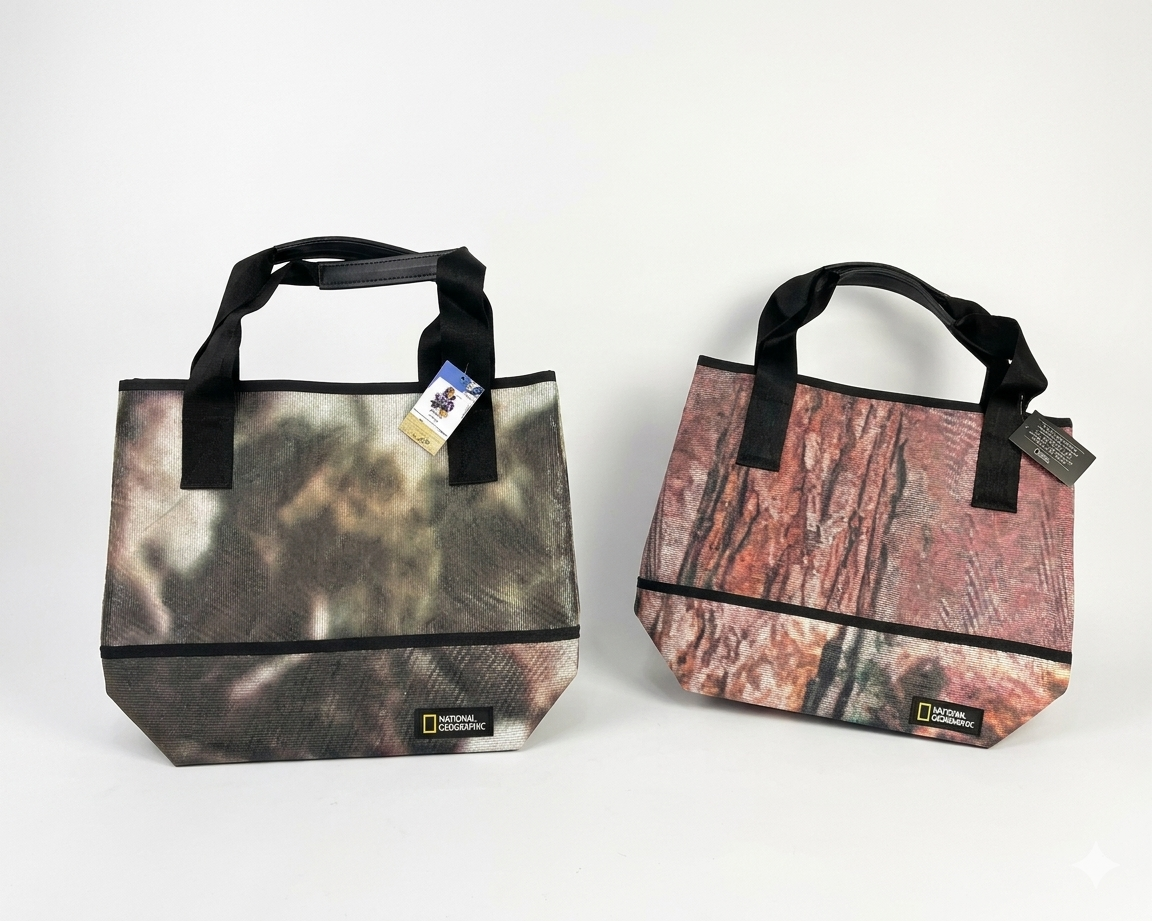
- The Material Shift: Mesh is lightweight and breathable, making it ideal for backpacks and everyday carry items. However, the open-weave nature of mesh requires a specialized lining to ensure the bags remain functional and don’t lose their shape.
- Preserving the Iconography: For the Genius: Aretha project, we were working with high-resolution portraiture of Cynthia Erivo. Our goal was to treat the material like a textile print. By carefully selecting the layout, we transformed a 20-foot portrait into a sleek, minimalist backpack that retains the “All Hail the Queen” aesthetic in a subtle, sophisticated way.
Why Upcycle Billboard Vinyl?
Upcycling isn’t just about “recycling”; it’s about Circular Design. By choosing to repurpose these 3 major billboards, National Geographic and Ecologic Designs achieved three major goals:
- Landfill Diversion: We diverted hundreds of pounds of non-biodegradable PVC from the waste stream.
- Carbon Footprint Reduction: Creating bags from existing materials uses significantly less energy and water than manufacturing “virgin” polyester or nylon.
- Lasting Brand Value: Instead of a single-use advertisement, the brand now lives on in the hands of fans as a functional, daily-use item.
“Marketing campaigns may end, but the value of the material shouldn’t.”
The “Green” Math: Quantifying the Impact
Sustainability is often vague, but the data from this 4-project partnership is clear. By diverting these materials, we achieved:
- Massive Landfill Diversion: Over 1,000 square feet of non-biodegradable material was removed from the waste stream.
- Reduced Virgin Resource Demand: By using existing vinyl and mesh, we bypassed the carbon-heavy process of manufacturing new polyester or nylon fabrics.
- A “Living” Brand Legacy: A billboard lasts 30 days. These bags will last for a decade or more, keeping the National Geographic brand story alive in the real world.
At Ecologic Designs, we specialize in turning “marketing waste” into your brand’s next great asset. Whether it’s billboards, event banners, or industrial scraps, we have the expertise to help you close the loop.
Ready to Tell Your Brand’s Sustainability Story?
Start a project or request your free mock-up today.
In addition, you can connect with us on our Linkedin page now.